Artificial intelligence and publishing: promises and threats

Artificial intelligence is upending all of society. Looking specifically at the publishing industry, artificial intelligence is changing the way people write and how the written word gets to the consumer.
I have written a brief overview of AI’s implications for writing anything from student papers to professional works. They run the gamut from improved efficiencies to downright scary social problems. Similarly, AI is upending the publishing business. It offers both promises of improved efficiency and threats of havoc and chaos. I have also written about artificial intelligence in libraries.
Artificial intelligence is just the latest in a centuries-long parade of disruptions in publishing. Looking at history can show us the patterns that will likely continue.
A brief history of disruption in the publishing business
From the very beginning of writing, publishing required professional scribes who would copy manuscripts by hand. Eventually, documents intended for an important customer would feature especially fancy calligraphy and illustrations.
Then came the printing press. It allowed much faster and less expensive production of books. More people could afford to own books. Printing also enabled new media, such as pamphlets and newspapers. It took centuries for printing technology to match the sheer beauty of illuminated manuscripts, but it made scriptoriums obsolete. You can still hire professional calligraphers to this day, however. Hardly any new technology has completely obliterated old technologies.
The nineteenth and early twentieth centuries saw more disruptions, including subscription publishing, serialized novels, and paperback books. Again, they made books and other printed material available to a wider public, but the products were in many ways inferior to traditional hardcover books. They did not completely replace hardcover books.
As recently as the 1980s, specialists in the publishing business built careers around mastering the nuances of typefaces, line spacing, kerning, and other aspects of designing the printed page.
Then came desktop publishing, which depended on desktop computers, laser printers, and special software. At first, it looked ugly, but pairing a Macintosh computer with a Linotype machine in 1988 made a dramatic improvement. Was it as good as professionally designed commercial printing? No, but the general public cared little about such nuances. This new automated technology was good enough to satisfy almost all customers.
Amazon, with its Kindle, has completely upended the publishing business, and not only in technology. It has changed the relationships of publishers and authors. And let’s not forget Google and its book digitization project. But electronic technologies have not killed off printed books.
What is artificial intelligence?
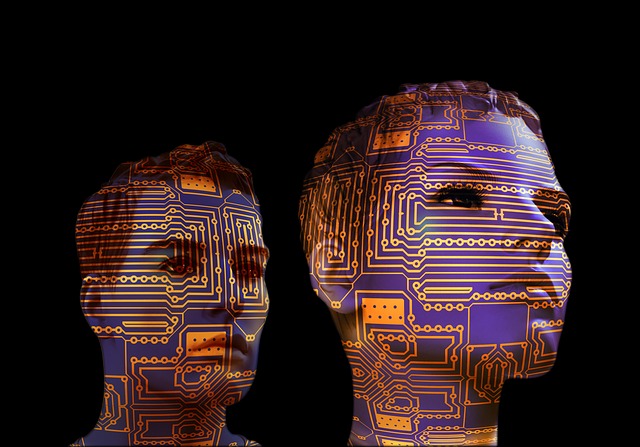 Artificial intelligence essentially combines computer science with huge datasets to create systems that can think and act like humans. Familiar examples include Apple’s Siri or Amazon’s Alexa. Less familiar examples include programs that can sift through, say, tens of thousands of pathology reports to help doctors arrive at more accurate diagnoses in much less time.
In 1997, world chess champion Gary Kasparov lost to a computer built by IBM. IBM had programmed all the rules of chess into its computer. World go champion Lee Sedule lost to a Google program in 2016. Instead of programming rules into its AlphaZero, the Google team supplied it with more general algorithms that enabled it to learn the rules of chess, go, and other games on its own.
Artificial intelligence is still a very imperfect technology being put to uses it is not yet capable of handling. For example, it enables self-driving cars, which have notoriously been involved in crashes.
In 2016, Microsoft introduced a chatbot called Tay (Thinking About You), hoping that it would learn to sound just like the internet. It did. It succeeded in finding the vilest racist and misogynistic language and imitated it so well that Microsoft had to pull the plug within a day of its release.
In general, AI has become both a useful tool and a threat to society. It remains to be seen how successfully society can protect itself from carelessness, incompetence, and criminal aspirations to take the best advantage of AI’s promise.
What is generative AI?
Generative AI has more recently burst on the scene. It includes generative pretrained transformers (GPT—most famously, ChatGPT) and large language models (LLM).
Generative AI works because the systems have been fed vast quantities of data to create deep neural networks. The systems learn, for example, what words are, the syntax languages use to turn words into sentences and sentences into paragraphs. They digest vast quantities of information and learn how to generate similar content. Of course, the vast quantities of information come from vast quantities of information written by humans. And if that content was written within the past century, it is probably copyrighted.
Writers and other content creators have sued AI companies, They don’t want the companies to train AI systems with their work without their permission. Hollywood writers have gone on strike demanding, among other things, protection from AI. Penguin Random House, the largest book publishing house in the US, has announced that it considers using content to train artificial intelligence systems without permission to be copyright infringement.
And yet a number of start-up publishing companies have designed their businesses around using AI for all aspects of book production from writing to marketing. Larger publishers must explore how they can use artificial intelligence or risk being left behind. They tend to avoid publicity for their efforts.
So far, literary authors are less threatened than journalists, copywriters, and other non-fiction writers, but already novels entirely written by AI are being offered for sale. By all accounts, or at least in the opinion of literary writers, AI-generated fiction is boring, but it might be good enough for much of the public.
Under current copyright law, text written by a bot can’t be copyrighted. The status of work started with AI and modified by humans is not clear.
Artificial intelligence and the future of the publishing industry
 Publishers have never had trouble finding people to supply content. The real problem, once they have released a book, is to get the public to notice. Fewer and fewer book review outlets exist. When buyers shop online, they are less likely to encounter and consider books they haven’t heard of than if they were browsing in a store. However skittish publishers might be about AI-generated content, they must learn to use AI to handle all the details that go into producing promoting their products.
Artificial intelligence, especially generative AI is making it possible to automate every function in book publishing.
All the disruptions of the past introduced something that, in some ways, was inferior to the technologies they displaced, but the products were good enough to be successful.
In the same way, generative AI might replace publishers’ copyeditors. The result might not satisfy the discerning eye of a professional editor, but it will be good enough for the general public.
Artificial intelligence also has, or will have, the capability of doing the work of acquisitions editors. ChatGPT can already assess whether a book is minimally well written and thus weed out submissions a human editor requires hours to examine.
Once a publisher prepares a book, artificial intelligence will become a tool for distribution, marketing, and advertising. Just as yeast in bread dough leaves no flour untouched, artificial intelligence will make its indelible mark on all aspect of the publishing industry.
Some ethical issues
An international group of 26 publisher societies recently released Global Principles on Artificial Intelligence. They put the statement forward as an ethical framework for AI in publishing and journalism. It deals with the issues of
- Intellectual property
- Transparency
- Quality and integrity
- Fairness
- Safety
- Design
- Sustainable development
It seems like a good first step toward defining ethical issues for artificial intelligence in publishing. These societies and associations, however, are rather far removed from the people who will actually be deploying artificial intelligence. It remains to be seen how much influence this statement will actually have.
Sources:
AI is about to turn book publishing upside-down / Thad McIlroy, Publisher’s Weekly. June 2, 2023
A.I.’s inroads in publishing touch off fear, and creativity / Elizabeth A. Harris and Alexandra Alter, New York Times. August 2, 2023
Global Principles on artificial intelligence (AI) / News/Media Alliance. September 6, 2023
What is artificial intelligence (AI) / IBM
What is generative AI and how is it trained? / DataForce, April 18, 2023
Comments
Artificial intelligence and publishing: promises and threats — No Comments
HTML tags allowed in your comment: <a href="" title=""> <abbr title=""> <acronym title=""> <b> <blockquote cite=""> <cite> <code> <del datetime=""> <em> <i> <q cite=""> <s> <strike> <strong>